The Rabari tribes, a community deeply rooted in the vibrant tapestry of Indian culture, have long fascinated anthropologists, historians, and travelers alike. In this comprehensive article, we will embark on a journey to unravel the intriguing history, customs, and way of life of the Rabari tribes. From their nomadic lifestyle to their rich embroidery traditions, we’ll delve into the heart of this enigmatic community.
The Rabari people are not organized into a single tribe but rather constitute a diverse community with various subgroups and clans. These subgroups are often regionally specific and have their own distinct customs, dialects, and social structures. Here are some of the prominent Rabari subgroups or tribes:

Kutchi Rabaris: The Kutchi Rabaris are one of the most well-known subgroups of the Rabari community and are primarily found in the Kutch region of Gujarat. They are known for their intricate embroidery work, which is a hallmark of Kutchi textile art. Kutchi Rabaris are traditionally cattle herders and have a semi-nomadic lifestyle.
Marwari Rabaris: These Rabaris are predominantly found in the Marwar region of Rajasthan. They have a rich cultural heritage and are known for their colorful attire and skilled embroidery work. Like other Rabari groups, they have traditionally been involved in cattle herding and trade.
Mewari Rabaris: The Mewari Rabaris reside in the Mewar region of Rajasthan, which includes cities like Udaipur. They have their own distinct dialect and cultural practices, closely tied to their pastoral way of life.
Gujarati Rabaris: Beyond Kutch, Rabari communities are also found in other parts of Gujarat, and they may have regional variations in their customs and traditions. These Rabaris, one of the famous tribes of Gujarat, have historically been cattle herders and are known for their embroidery and craftsmanship.

Dhebaria Rabaris: Dhebaria Rabaris are a subgroup of the Rabari community found in both Gujarat and Rajasthan. They are known for their distinctive clothing and jewelry, often characterized by silver ornaments worn by women.
Kathiawadi Rabaris: The Kathiawadi Rabaris are based in the Kathiawar or Saurashtra region of Gujarat. They are known for their skilled cattle herding and are integral to the region’s pastoral economy.
Banjara Rabaris: The Banjara community has historical ties to the Rabari people, and some Banjara groups identify as Rabari. The Banjaras are traditionally nomadic and have a unique cultural identity with their own language, costumes, and traditions.
Origins of the Rabari
A Glimpse into History
The Rabari tribes trace their lineage back to the western Indian state of Gujarat. Believed to have migrated from the Marwar region of Rajasthan, their roots can be traced as far back as the 8th century. Over the centuries, they have spread to various parts of India, including Rajasthan, Haryana, Punjab, and even parts of Pakistan.
Migration from Central Asia: Some scholars believe that the Rabari people have their roots in Central Asia and migrated to the Indian subcontinent several centuries ago. They are often associated with the larger group of Indo-Aryans who migrated to India in waves and contributed to the formation of the region’s diverse culture and society.
Kshatriya Connection: According to Rabari folklore and oral traditions, they claim to be descendants of Kshatriyas, one of the four varnas (social classes) in Hinduism. They assert that their ancestors were warriors and protectors of cattle, and their way of life reflects this heritage.
Rajput Affiliation: Another theory links the Rabari community to the Rajputs, a prominent warrior clan in North India. Some Rabari groups have historically served as cattle herders and guards for Rajput rulers, suggesting a close association between the two communities.
Ancient Trade Routes: The Rabari people have long been involved in trade and commerce, particularly in livestock. Their mobility and knowledge of trade routes led to their prominence in the caravan trade, including the famous Silk Road, which passed through the Indian subcontinent. This interaction with various cultures could have influenced their unique customs and practices.
Dravidian Influence: In some regions, the Rabari community has assimilated with local Dravidian cultures over time. This blend of Indo-Aryan and Dravidian influences has contributed to their distinctive identity.
Rabari Culture
Nomadic Lifestyle: Traditionally, Rabari families were nomadic, constantly on the move in search of grazing land for their livestock. This nomadic lifestyle shaped their culture, as they developed portable and functional belongings suited to a mobile existence.
Cattle Herding: Cattle, especially cows and buffaloes, hold immense importance in Rabari culture. They are not only a source of livelihood but also considered sacred. Rabari families are skilled cattle herders and take great care of their herds.
Camel Breeding: In addition to cattle, Rabaris are known for their expertise in breeding and rearing camels. Camels are used for transportation and as pack animals, and their wool and milk are valuable resources.
Embroidery and Textiles: Rabari women are renowned for their exceptional embroidery skills. They create intricate designs and patterns on clothing, bags, and other textiles. This traditional Rabari embroidery, known as “Rabari embroidery” or “Rabari mirror work,” is characterized by the use of small mirrors, colorful threads, and geometric motifs.
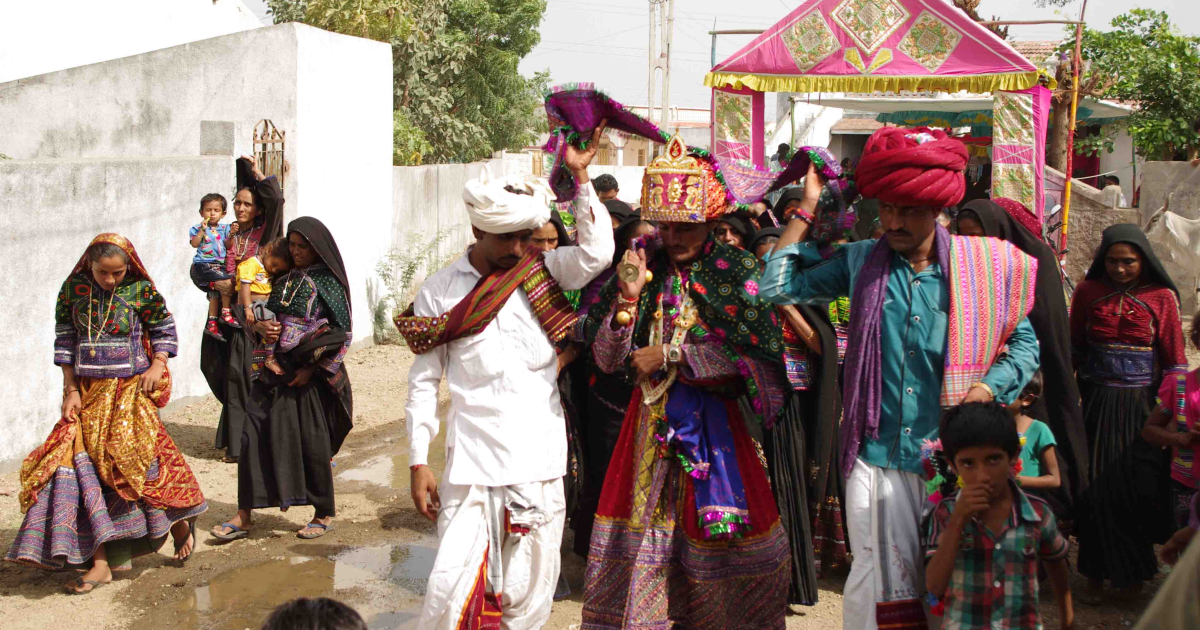
Clothing: Rabari attire is distinctive and reflects their cultural identity. Women typically wear long, pleated skirts, embroidered blouses, and ornate jewelry, while men often don turbans, dhotis (loincloths), and traditional shirts.
Social Structure: Rabari society is organized into clans, each with its own hierarchy and leadership structure. Marriages within the same clan are traditionally discouraged. Elders play a significant role in decision-making and dispute resolution.
Religious Beliefs: The majority of Rabaris practice Hinduism, and their religious rituals are deeply intertwined with their pastoral lifestyle. Cattle are considered sacred, and various rituals and ceremonies are performed to honor them. They also celebrate Hindu festivals with enthusiasm.
Language: Rabari people primarily speak the Rabari language, which belongs to the Rajasthani group of Indo-Aryan languages. However, many also speak the regional languages of the areas in which they reside.
Trade and Barter: Historically, Rabaris have been involved in trade and commerce, particularly in the exchange of livestock, textiles, and other goods. Their mobility and knowledge of trade routes have made them important players in regional trade networks.
Challenges and Changes: In recent years, urbanization and changing economic conditions have led to a shift in the Rabari way of life. Many have transitioned to more settled lifestyles, while some continue to embrace their traditional nomadic heritage.
Traditions and Rituals
Marriage Customs:
Arranged Marriages: Rabari marriages are typically arranged by the parents, and matches are often made within the community or with other Rabari subgroups.
Intricate Wedding Attire: Rabari weddings are known for their colorful and elaborate attire. Brides wear embroidered skirts and blouses, adorned with jewelry, while grooms don traditional clothing such as turbans and dhotis.
Wedding Processions: Wedding ceremonies are celebrated with grand processions, music, and dance. The groom rides a decorated horse or camel to the bride’s village, accompanied by family and friends.
Cattle Worship:
Cattle as Sacred: Cattle, especially cows, hold a sacred status in Rabari culture. They are considered a symbol of prosperity, and special rituals are performed to honor them.
Gau Puja: Gau Puja, or the worship of cows, is a common practice among Rabaris. They offer prayers and decorations to their cattle and seek their blessings for good fortune.
Embroidery and Textile Traditions:
Rabari Embroidery: Rabari women are renowned for their exceptional embroidery skills. They create intricate designs and patterns using colorful threads and small mirrors, often adorning their clothing and textiles with these works of art.
Religious Festivals:
Hindu Festivals: Rabari people predominantly follow Hinduism and celebrate Hindu festivals with great enthusiasm. Diwali, Holi, and Raksha Bandhan are some of the major festivals observed.
Mela: Rabaris often participate in rural fairs and melas (festivals) that coincide with religious or cultural events. These gatherings provide opportunities for trade, socializing, and showcasing their embroidery and crafts.
Rituals Related to Birth and Death:
Naming Ceremony: A naming ceremony is conducted a few days after a child’s birth, where the child is given a name based on astrological considerations.
Funeral Rituals: When a Rabari member passes away, specific funeral rituals are performed, including cremation, offerings to the deceased’s soul, and mourning ceremonies.
Nomadic Traditions:
Migration: Although many Rabari families have settled down in recent times, some still maintain a semi-nomadic lifestyle. During migrations, they follow established routes and engage in transhumance, moving their livestock to find suitable grazing areas.
Community and Social Gatherings:
Bhancha and Panchayat: The Rabari community has its own councils known as “Bhancha” or “Panchayat,” which play a role in dispute resolution and community governance.
Community Events: Community gatherings, festivals, and fairs provide opportunities for socializing and strengthening community bonds.
Oral Traditions and Folklore:
Storytelling: Rabari culture is rich in oral traditions, including folk tales, songs, and myths that are passed down through generations. These stories often convey moral lessons and cultural values.
Tribal Arts and Crafts:
Pottery and Weaving: In addition to embroidery, Rabari communities are known for their pottery and weaving traditions. They create a variety of utilitarian and decorative items using these skills.
Challenges Faced by the Rabari Tribes
Modernization and Displacement
In recent decades, the Rabari way of life has faced significant challenges due to modernization and urbanization. Many tribal members have had to adapt to a more settled lifestyle as their traditional grazing lands have shrunk.
Preserving Their Heritage
Efforts are underway to preserve the rich heritage of the Rabari tribes. Various NGOs and government initiatives aim to provide education and healthcare while also promoting their unique art forms. These endeavors are crucial in ensuring that the Rabari culture thrives in the modern world.
FAQs (Frequently Asked Questions)
Q-1 Are the Rabari tribes only found in India?
While the Rabari tribes are primarily located in India, you can also find Rabari communities in parts of Pakistan.
Q-2 What is the significance of Rabari embroidery?
Rabari embroidery is not just decorative; it holds deep cultural and symbolic meaning, often depicting stories from the tribe’s history.
Q-3 Do Rabari tribes still follow a nomadic lifestyle today?
While some Rabari families continue their nomadic traditions, many have settled in semi-urban areas due to changing circumstances.
Q-4 Are there any famous Rabari festivals?
Yes, the Rabari tribes celebrate several festivals, with the Kutch Festival being one of the most famous, showcasing their vibrant culture.
Q-5 How can I support efforts to preserve Rabari culture?
You can support NGOs and organizations working towards the preservation of Rabari culture through donations and advocacy.
 India Travel Blog – Tours to India